
Kagando Mission Hospital, Uganda (24th September – 8th October 2023).
I would like to send a huge thank you to all those who have supported me over the past few weeks at a fistula camp in Uganda.
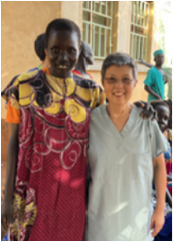
In September/October 2023, I joined a team of doctors, Professor Judith Goh (pictured left with a patient) and Professor Hannah Krause, both from Australia (pictured right with patients). They have been providing care through fistula / prolapse surgical camps at Kagando Mission Hospital on an annual basis since 2010, and Dr Jackie Smalldridge, a colleague from Auckland, has attended this camp 6 times with Judith and Hannah.

Kagando Mission Hospital is a 250 bed hospital, originally a leprosy hospital, founded by the Anglican Church of Uganda. I was impressed to hear that in 2014, when patients were finding it difficult to meet their past debts, the hospital had a “jubilee year” and waved all patients past debts. Through this gracious act, communities in the Rwensori mountains are now able to afford to meet payments for their health care and the hospital is a very busy hub of healthcare.
Your support has been instrumental in providing care for women at our surgical camp. The surgical team are all volunteers and self-funded, and so all money from your very kind and generous donations have been used to pay for women’s surgeries - meet surgical costs, hospital stay, and transportation for patients who otherwise could not afford the costs of this surgery.

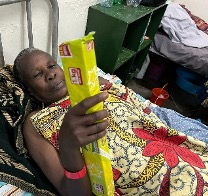
The HADA foundation of Australia assists Judith and Hannah to provide this care and over the 2 week period, I had the privilege to assist and operate alongside these incredible doctors providing surgical assistance for prolapse and fistula. Women with these child birth related injuries are ostracised from their communities, have often suffered for many years experiencing uncontrollable leakage from the bowel and bladder, and the joy they show when given the opportunity of repair was such a wonderful experience to share. Over the 2 weeks, we were able to provide surgical assistance for 73 women and another camp, 30min away in Kasese, provided surgical treatment for prolapse and together our two camps reached over 150 women. Local Ugandan doctors who attended these camps were upskilled including a visiting doctor from DR Congo. Each patient is given a bar of soap (pictured right) and a new pair of underwear.

HADA assisted with Dr Marvin’s urology training at Kilimanjaro Christian Medical Centre a few years ago. Marvin is now a valuable team member offering patients the opportunity to be treated for complex urological conditions, including a few patients seen at our camp with paediatric ectopic ureters.
Kagando hospital has a strong focus on education and has a nursing and midwifery training centre which upskills and trains its local medical staff and the wider community.
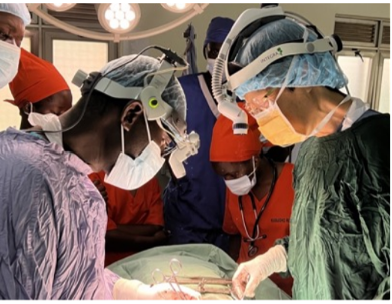
Dr Marvin pictured with Prof. Judith Goh
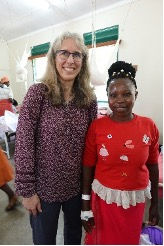
My colleague from Auckland, Dr Jackie Smalldridge who also assisted our surgical camp had the opportunity to visit one of the villages and review 5 trained nurses undertaking the cervical screening programme, assessing seventy women and referring any patients to Kagando gynaecology clinic if abnormalities were detected. Apart from cervical screening, the local health care team also performed breast examination, screening for hypertension, diabetes, malnutrition, and HIV. Although no abnormalities were detected on that day, the nurses informed Jackie that on the previous camp, 4 women with suspected cervical cancer were referred to Kagando Hospital for treatment. (Pictured right: myself with a patient)
While at Kagando Hospital, I was walking back to my room one night and had the unfortunate event of tripping into a ditch and sustained an ankle sprain. All praise and thanks to the Lord, I was able to work through the camp and after the operating days were over, I had an xray confirming a small fracture to my fibula. I love Romans 8:28 – We know that in all things God works for the good of those who love him, who have been called according to his purpose, and I then had the privilege of meeting Ronald, an orthopedic technician who hand made an incredible splint for my ankle and I learned about his work for patients who need an artificial leg.
The Rwensori mountain range reaches a height of 5,200m, with communities living up its slopes to 2,100m (Mount Cook’s height is 3,724m). Legs are a life line to access. Ronald had recently fitted a limb for an 8 year old boy who had been under Ronald’s care since his leg was caught in the spoke of a bodaboda (motorbike) at age three. Now at eight years old, he received his first artificial limb with a hinge, and Ronald shared a video of his joy at running. Ronald provides 3-4 patients with


artifical legs every month, taking 3 days to make a limb and 4 days to teach a patient how to use it. He took great pride in telling me his limbs are half the price of his counterparts around the country, but sadly many cannot afford an artifical limb or need to make repayments over several years. For children whose growth spirts require their limbs to be adjusted regularly, the mounting costs are debilitating for families. The cost of a child’s artifical leg is $80 US and for an adult is around $200 US.
I am so thankful to our heavenly father for his hand of protection upon our camp and feel so blessed to have had the incredible priviledge to use the gifts God has given me to share with fellow family in Christ. I wish to thank you for your openness to help, your interest in my work, your prayers and support. May God bless each of you.
Blessings,
Dr Louise Tomlinson
Consultant Gynaecologist
Auckland

-----------------------------------------------------------------------------------------------
Kagando Mission Hospital, Uganda (1st August - 22nd August 2024).
It was an absolute privilege to attend my second surgical camp in the Rwenzori Mountains, west Uganda, on the border of Democratic Republic of Congo. I attended the camp at Kagando Mission Hospital, set in the foothills at 1800m. Prof. Judith Goh and Prof Hannah Krause, two Australian urogynaecologists have been attending this camp since 2011, and are incredible doctors, passionate to see lives transformed through their work. It is an absolute joy to join them. We arrived on Saturday 3rd August, to a warm welcome from 100+ patients waiting to be assessed. The afternoon was spent assessing patients and identifying those who could be helped surgically and those who could be assisted medically.
It was an absolute privilege to attend my second surgical camp in the Rwenzori Mountains, west Uganda, on the border of Democratic Republic of Congo. I attended the camp at Kagando Mission Hospital, set in the foothills at 1800m. Prof. Judith Goh and Prof Hannah Krause, two Australian urogynaecologists have been attending this camp since 2011, and are incredible doctors, passionate to see lives transformed through their work. It is an absolute joy to join them. We arrived on Saturday 3rd August, to a warm welcome from 100+ patients waiting to be assessed. The afternoon was spent assessing patients and identifying those who could be helped surgically and those who could be assisted medically.
It was an absolute privilege to attend my second surgical camp in the Rwenzori Mountains, west Uganda, on the border of Democratic Republic of Congo. I attended the camp at Kagando Mission Hospital, set in the foothills at 1800m. Prof. Judith Goh and Prof Hannah Krause, two Australian urogynaecologists have been attending this camp since 2011, and are incredible doctors, passionate to see lives transformed through their work. It is an absolute joy to join them. We arrived on Saturday 3rd August, to a warm welcome from 100+ patients waiting to be assessed. The afternoon was spent assessing patients and identifying those who could be helped surgically and those who could be assisted medically.

Thankyou so much to those who contributed to the drills and power items that were put to use by the prosthetic team with lightning speed. They needed no guidance to assemble these and when I visited a few days later, as photos show, the tools were already covered in plaster dust and rarely at rest.

Our daily routine began at 6:30am with breakfast, and a walk down the hill to the hospital where we completed a postoperative ward round of all patients operated on in the preceding days, which grew as the days continued to over 70patients. Around 8am, the team headed to theatre where patients were waiting.The brilliant anaesthetic staff, very skilled in their role, gave some of the fastest spinal anaesthetics I’ve seen.

We were joined by Dr Baluku, head of the Obstetric/Gynaecology department at Kagando and registrar Dr Fortunate who was eager to learn and a pleasure to teach. Dr Mahindo also joined us travelling from the Congo, to refine his operative skills in the field of urogynaecology.
Our group consisted of Professor Judith and Professor Hannah Krause, with their registrar Dr Hnin, colleagues from New Zealand Drs Jackie Smalldridge, Dr SumSum Lo and myself, and a consultant from Singapore, Dr Kazila and Darren, a fellow photographer who was able to capture Prof Goh and Prof Krause’s pelvic floor reconstructions which will be used for teaching/training.

Dr Kazilla attended a day with the community nurses in the mountain villages, where she saw first hand the screening programme in place, including BP checks, cervical and breast screening and HIV checks. Pleasingly, with over 150 patients assessed, no HIV positive patients were identified. Of our surgical patients, the HIV positive rate was 7%, significantly less than previous years, where rates have been around 16%.
With 3 operating tables in progress daily, between 10-12 patients received surgery each day. A total of 92 women over the camp received surgical assistance. After a afternoon ward round our team trudged, tired but happy, back up the hill to a shower and a well appreciated dinner before bed. This routine continued for the camp’s duration, flying out to Entebbe on Thursday 15th August.
This camp would not be possible without generous donations. I would like to thank very much In The Gap Ministries and all who have supported our work in Uganda. The difference your donations makes to the lives of others is immeasurable. Women go home, healed from the devastating injuries sustained mostly with childbirth, free from the stigma of always smelling of faecal or urinary incontinence, no longer ostracized and free to begin new lives back in their communities.
May the Lord bless you for the support you have given towards our teams work in Uganda.
Kagando Mission Hospital, Uganda (1st August - 16th August 2025).
I am very grateful to again have been able to attend my third fistula and prolapse surgical camp in western Uganda from 1st August to 16th August 2025, and I thank you all for your part in this journey

Professor Judith Goh and Professor Hannah Krause, two world renowned urogynaecologists, have been visiting Kagando Mission Hospital in western Uganda since 2011. A huge amount of advertising takes place, with radio announcements and nursing staff visiting many villages identifying women in need prior to each camp. Kagando Mission Hospital also has a nursing training school providing much needed education and health care opportunities.


Our team this year included 5 consultants, 3 registrars, 1 house officer and a photographer who was assisting Professor Goh and Professor Krause with training surgical videos, a hugely important part of education used in training for often very challenging surgeries. We were joined by Ugandan Urologist, Dr Marvin, with whom Judith and Hannah have had a long association including being instrumental in his training and ongoing assistance as he develops his urology unit. Another colleague from D.R. Congo, Dr Mahindo joined us again and it was rewarding to see the progression of his skills and confidence.
On arrival, over 110 women were screened and over the subsequent 10 days, 85 women received surgery for fistula (a connection between the bladder and birth passage or a connection between the rectum and birth passage), pelvic organ prolapse and 2 patients required their ureter (the drain pipe from the kidney to the bladder) to be reimplanted.

Working in a low resource setting has many challenges. Patients have endured incredible hardship, often living with birth related injuries for many years, losing their babies, and being ostracised from their communities. These courageous women embark on traveling long distances. With time away from loved ones, unable to contribute to the daily tasks needed to sustain life, and the unknown of what surgery may or may not be able to provide weighs heavily. It is currently planting season in Uganda, a necessity before the rains arrive which have come early this year.

Donations given for the camp are all used to fund the costs for patients including their transport, surgery, pre and postoperative cares, which include food and the surgical / nursing cares, and for some involves a 3 week hospital admission. Our team are voluntary and fund their own travel expenses and dedicated staff such as Harriet (right) work tirelessly to care for the patients. Each patient is given a fresh pair of underwear and a 1kg block of soap (pictured below).


The surgical challenges are also significant. One operating light was broken, one diathermy machine is shared between three operating tables depending on its greatest need, and the suction apparatus is limited. The ability to give a blood transfusion is not readily available and the degree of trauma sustained to the pelvic floor requires at times major reconstruction. I thank you for your input in assisting with surgical instruments, to enable us to carry out our work. The physical and psychological challenges women face living with their injuries are immense, and it is an incredible privilege to see their joy as they begin their road to recovery.
I am hugely thankful for your support through In The Gap Ministries to provide the prosthetic department with equipment and tools. Over the past 3 years, your sponsorship has enabled over 90 people to receive the gift of a prosthetic lower limb to again be mobile and able to function. The prosthetic department continue to provide not only prosthetic lower limbs but also walking frames, crutches and wheelchairs. During my visit, I met a cobbler who is making shoes for patients suffering from leprosy who require modified shoes.


Thank you again for your valuable part in our journey to see women’s lives transformed receiving life changing surgeries. This enables them to return to families, with renewed self-esteem and able to start life again, knowing someone across the other side of the world cares, and for that we are very thankful.
“The joy of the Lord is our strength” Nehemiah 8:10
UGANDA report 2026
Dear Roly and Gail, Please find attached a wee update from my trip to Uganda. Thank you so much for your wonderful support and prayers. May our heavenly father continue to bless you both and give you strength for each day xx In the Gap ministry update on Uganda It was a very special privilege to again join Prof. Judith Goh and Prof Hannah Krause at a prolapse and fistula surgical camp in Kagando Mission Hospital, Western Uganda from the 6th August to the 19th August 2026, where I attended my 4th camp. Professor Judith Goh and Professor Hannah Krause (HADA foundation), two world renowned urogynaecologists, have been visiting Kagando Mission Hospital in western Uganda since 2011. They work tirelessly for women in low resource settings and are truly inspirational. They combined this trip following a 1 week camp in South Sudan before meeting us in Uganda. Our team was smaller this year, due to challenges with the Ebola outbreak in neighbouring Democratic Republic of Congo. I joined Prof Judith Goh and Prof Hannah Krause and their fellow, Dr Hannah Rienks from Australia. We were initially joined by Dr Tom Cairns and his wife Katherine, a midwife from Australia who were with us for 4days. We caught a MAF Flight to Kasese and then drive into the mission hospital in the Rwensori mountains. We screened 96 women and over the following 8days, 73 women received surgery for fistula (a connection between the bladder and birth passage or a connection between the rectum and birth passage), or pelvic organ prolapse. Each patient is asked a series of questions related to their condition and how it impacts their function, physically and emotionally. Patients have endured incredible hardship, often living with birth related injuries for many years, losing their babies, and being ostracised from their communities. This lovely lady is 75 year old. She has had 9 babies, 1 of her children is still alive. She has suffered from her condition for 20years, never been to hospital but heard on the radio about some Mzungu (white people) coming to Kagando who could help her. Donations given for the camp are all used to fund the costs for patients including their transport, surgery, pre and postoperative cares, which include food and the surgical / nursing cares, which for some involves a 3 week hospital admission. Our team are voluntary and fund their own travel expenses and dedicated staff work tirelessly to care for the patients. Each patient is given a fresh pair of underwear and a 1kg block of soap. I am so grateful for your support for the Prosthetic department through In The Gap ministry over the past 4 years. The prosthetic department has become well known throughout Uganda for its care and good prosthetic equipment. The materials have been donated but a lot of time and detail goes into making a limb. Your sponsorship has enabled over 140 patients to receive the gift of a prosthetic lower limb which enables the person to be mobile and able to function and work. This visit, In the Gap ministry provided: A hammer, hacksaw and blades, drill bits, G-clamps and a laptop computer to allow the staff to keep track of patients and their care. I would like to sincerely thank you all for your assistance and support to see women’s lives transformed by life changing surgeries, which enable women to return to families, and start life afresh with dignity.

Helvetica Light is an easy-to-read font, with tall and narrow letters, that works well on almost every site.